
Why Tires Go Flat and What Fixes the Problem
Flat tires usually happen because something lets air escape. That can be a nail in the tread, a crack in the sidewall, a bad valve stem, or a leak around the rim. The right fix depends on the cause. Some tires can be patched and sealed. Others need full replacement. Knowing what caused the flat helps you decide the safest next step.

Common Symptoms of a Flat or Failing Tire
A flat tire is not always fully flat at first. Sometimes it loses air slowly. Watch for these signs while driving:
- Your car pulls to one side
- The steering wheel feels shaky
- You hear a flapping or thumping sound
- The tire pressure warning light turns on
- The tire looks low or squished at the bottom
If you notice any of these issues, check your tires right away. Driving too long on low air can ruin the tire.
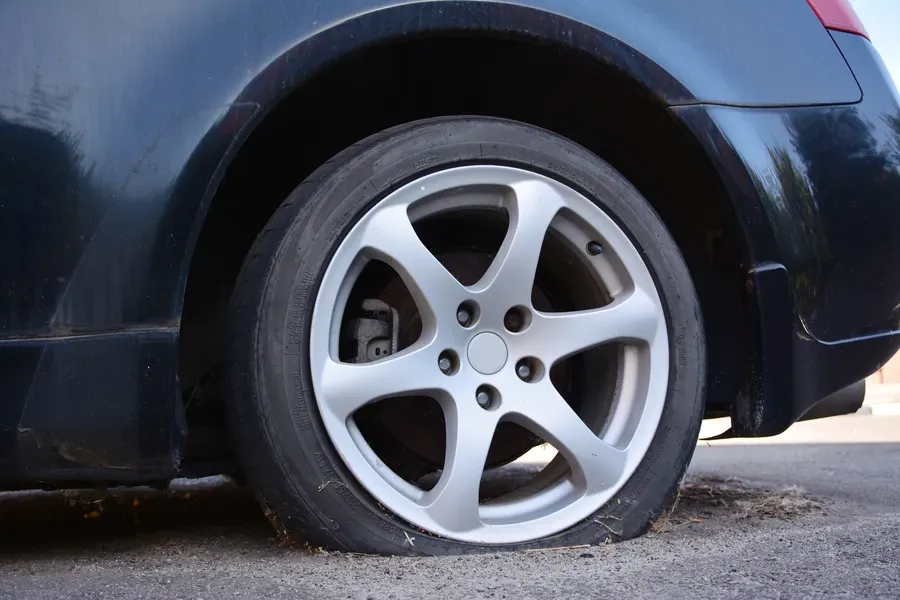
Most Likely Causes of Flat Tires
Flat tires happen for many reasons. Some are sudden. Others build up over time.
Punctures from sharp objects are very common. Nails, screws, and glass can pierce the tread. Air slowly leaks out through the hole.
Sidewall damage is another cause. Hitting a curb or pothole can crack the side of the tire. Sidewall damage usually cannot be repaired safely.
Worn-out tread also leads to flats. Old tires become thin and weak. They are more likely to split or tear.
Faulty valve stems can leak air. The small valve where you add air may dry out or crack over time.
Bead leaks happen where the tire seals against the wheel rim. Rust or dirt along the rim can break that seal.
What to Check First
If you have a flat, start with a quick inspection:
- Look for visible nails or screws in the tread.
- Check the sidewall for cuts or bubbles.
- Listen for hissing sounds.
- Spray soapy water on the tire and watch for bubbles.
- Inspect the valve stem for cracks.
If the damage is in the center tread area and small, it may qualify for flat tire repair. If the damage is on the sidewall, replacement is usually safer.
Safe Fixes Versus Professional Repairs
Some drivers use temporary sealants or plug kits. These can help in an emergency. They are not long-term solutions.
A proper flat tire repair includes removing the tire from the wheel. The damaged area is inspected from the inside. A patch or patch-plug combo is installed. This seals the inner liner and fills the hole. This method helps restore strength to the tire.
If the hole is too large, or if the sidewall is damaged, repair is not safe. In that case, replacing the tire is the right choice.
This type of auto service should always focus on safety first. Saving a tire is great, but not at the risk of a blowout later.
Prevention Tips to Avoid Future Flats
You cannot avoid every sharp object on the road. But you can lower your risk.
- Check tire pressure once a month.
- Keep tires inflated to the recommended level.
- Rotate your tires every 5,000 to 7,000 miles.
- Replace tires when tread gets too low.
- Avoid potholes and rough road edges when possible.
Regular checks help you catch slow leaks early. Fixing a small problem fast often prevents a full flat later.
Get Reliable Help for Your Tire Needs
If you have a flat tire in Accokeek, MD, quick action can prevent bigger problems. Our team at Accokeek Tires LLC handles flat tire repair using safe, proven methods, and we inspect each tire carefully before recommending a fix or replacement. Call us at (240) 320-4964 to schedule service or get help right away so we can get you back on the road safely.